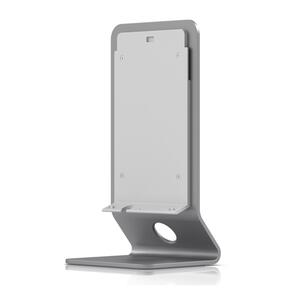
 Ubiquiti UDB-AU UniFi Device Bridge with integrated UniFi WiFi Auto-Link
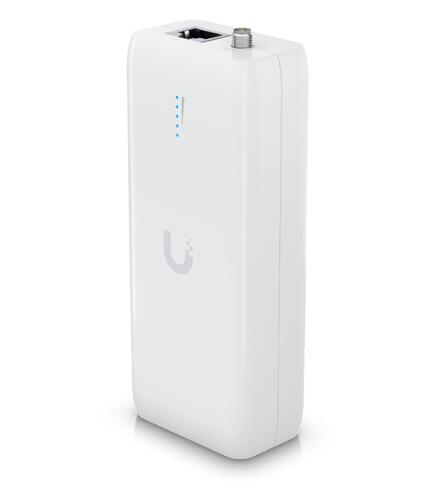
Ubiquiti UDB UniFi Device Bridge connects and powers wired PoE devices over 5 GHz WiFi with Gigabit Ethernet and simple WiFi Auto-Link setup.
Ubiquiti UniFi Device Bridge UDB
The Ubiquiti UniFi Device Bridge (UDB) provides a simple way to connect and power a wired PoE device where running an Ethernet cable back to the network is impractical. It combines a 5 GHz WiFi 5 wireless uplink, Gigabit Ethernet and up to 15W of PoE output in a compact plug-in unit with integrated UniFi WiFi Auto-Link.
Wireless connectivity for wired PoE devices
The UDB converts a compatible UniFi wireless connection into a Gigabit Ethernet connection for devices that would normally require a cabled network drop. It is particularly useful for adding a UniFi Protect camera, UniFi Talk phone or other compatible Ethernet device in a location with mains power and suitable UniFi WiFi coverage.
Typical applications include:
- Connecting a wired PoE camera without installing a new Ethernet run
- Adding a UniFi Talk phone in a difficult-to-cable location
- Providing network connectivity to compatible Ethernet-based IoT equipment
- Extending wired connectivity across offices, retail premises and existing buildings
- Temporary installations where permanent structured cabling is unsuitable
Integrated PoE output simplifies installation
Unlike a conventional wireless client bridge, the UniFi Device Bridge also functions as a PoE power adapter. Its Gigabit Ethernet port can provide up to 15W of PoE, allowing one compatible device to receive both power and network connectivity through a single Ethernet cable.
The UDB itself plugs directly into a standard 100–240V AC power outlet, reducing the need for a separate PoE injector, DC power supply or nearby network switch.
The connected device must operate within the UDB’s 15W PoE output limit. Devices requiring PoE+ or a higher power budget will need another solution.
UniFi WiFi Auto-Link integration
UniFi WiFi Auto-Link is designed to simplify wireless bridging within the UniFi ecosystem. The UDB automatically establishes its wireless uplink through compatible UniFi infrastructure, avoiding the manual configuration normally associated with traditional client bridges.
The UniFi Console and access points must be running current software. The UDB is intended for use with compatible UniFi WiFi infrastructure and should not be treated as a universal bridge for arbitrary third-party wireless networks.
5 GHz WiFi 5 performance
The UDB uses a 2x2 MIMO WiFi 5 radio operating on the 5 GHz band, with a maximum signalling rate of 866.7 Mbps using an 80 MHz channel. This provides substantially more wireless capacity than the 2.4 GHz connection used by the smaller UDB-IoT.
Actual throughput will depend on signal strength, channel conditions, interference, access-point capability and the surrounding building materials. The four signal-strength LEDs assist with positioning the bridge for a reliable wireless connection.
Internal and external antenna options
A built-in 5 dBi antenna supports clean, self-contained installations. An RP-SMA connector also allows the supplied external 4 dBi omnidirectional antenna to be used where its antenna pattern or physical orientation provides a better connection.
This flexibility can help installers optimise signal reception when the location or orientation of the power outlet is not ideal.
Compact wall or tabletop installation
Measuring only 130 x 55 x 34 mm, the UDB can be installed discreetly close to the connected device. It supports tabletop placement and includes a wall-mounting option, making it suitable for offices, retail spaces, reception areas and indoor surveillance installations.
The UDB is designed for indoor environments with an operating temperature range of -10°C to 40°C. It does not carry an outdoor weatherproof rating.
UDB compared with UDB-IoT
The standard UDB is the better choice when the connected device requires PoE or would benefit from a faster Gigabit Ethernet and 5 GHz wireless connection.
The UDB-IoT is smaller and supports USB-C or 9–30V DC power, but uses 2.4 GHz WiFi 4 and has a 10/100 Mbps Ethernet port without PoE output. It is primarily intended for low-bandwidth IoT and industrial devices that have their own power source.
|
Specification |
Details |
|---|---|
|
Manufacturer |
Ubiquiti |
|
Product name |
UniFi Device Bridge |
|
Model |
UDB |
|
Primary function |
Wireless bridge with Ethernet and PoE output |
|
UniFi integration |
UniFi WiFi Auto-Link |
|
WiFi standard |
WiFi 5 (IEEE 802.11a/n/ac) |
|
Wireless band |
5 GHz |
|
MIMO |
2x2 |
|
Spatial streams |
2 |
|
Maximum wireless data rate |
866.7 Mbps with 80 MHz channel width |
|
Channel widths |
20, 40 and 80 MHz |
|
Wireless security |
WPA2 AES |
|
Maximum transmit power |
21 dBm |
|
Internal antenna gain |
5 dBi |
|
External antenna |
4 dBi omnidirectional antenna |
|
External antenna connector |
RP-SMA |
|
Networking interface |
1 x Gigabit Ethernet RJ45 |
|
PoE output |
Up to 15W |
|
Power input |
100–240V AC, 0.45A maximum, 50/60 Hz |
|
Maximum power consumption |
25W including available PoE output |
|
Device consumption |
10W maximum excluding PoE output |
|
Management connection |
WiFi |
|
Signal indicators |
4 x blue signal-strength LEDs |
|
Status indicator |
White/blue LED |
|
Reset control |
Factory-reset button |
|
Mounting options |
Tabletop or wall |
|
Wall mount |
Included |
|
Enclosure material |
Polycarbonate |
|
Dimensions |
130 x 55 x 34 mm |
|
Weight |
200g |
|
Operating temperature |
-10°C to 40°C |
|
Operating humidity |
5–95% non-condensing |
|
NDAA compliant |
Yes |
|
Important requirement |
Compatible UniFi infrastructure with current console and access-point software |
|
Deployment environment |
Indoor |